arXiv:2509.12475
Liquid Helium Cryogenic TEM below 1 Å
Demonstrates sub-angstrom atomic imaging at specimen temperatures down to about 20 K, with low stage drift and stable hold times.

Liquid helium cryogenic TEM below 1 Å
h-Bar Instruments develops side-entry liquid helium cooling stages for next-generation cryogenic TEM: high-resolution imaging at ultracold sample temperatures, extended hold times, low stage drift, and stable operation down to 20 K, and variable temperature control.
Demonstrates sub-angstrom atomic imaging at specimen temperatures down to about 20 K, with low stage drift and stable hold times.
Nature 2026
Liquid helium cryogenic STEM down to 20 K directly images nanoscale polar textures in quantum paraelectric SrTiO3
Read Nature articleMicroscopy and Microanalysis 2026
Liquid helium atomic-scale STEM and ptychography for probing low-temperature phases.
Read journal articlearXiv:2509.16730
In situ cryogenic electron microscopy down to 20 K observing size-dependent CDW nucleation and melting in nanoflake 1T-TiSe2.
Read manuscriptPNAS 2025
Advances in mechanical and thermal stability of liquid helium holder enable atomic resolution TEM over multiple days.
Read PNAS articlearXiv:2509.12475
Sub-angstrom atomic imaging at ultracold sample temperatures.
Read manuscript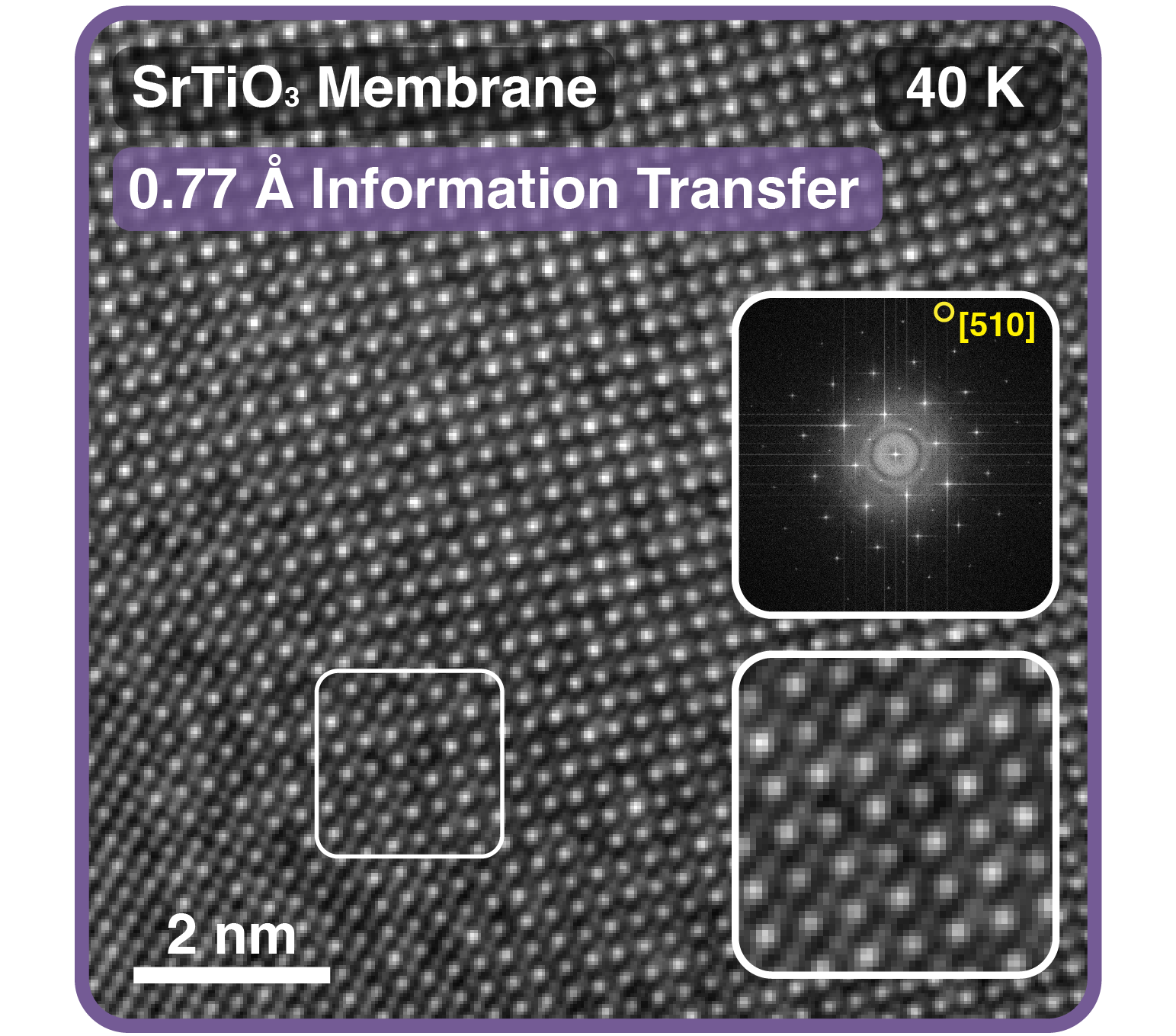
New atomic-resolution data
The new result shows 0.77 Å information transfer with a direct-space lattice image, FFT, and magnified atomic inset.
Temperature stability
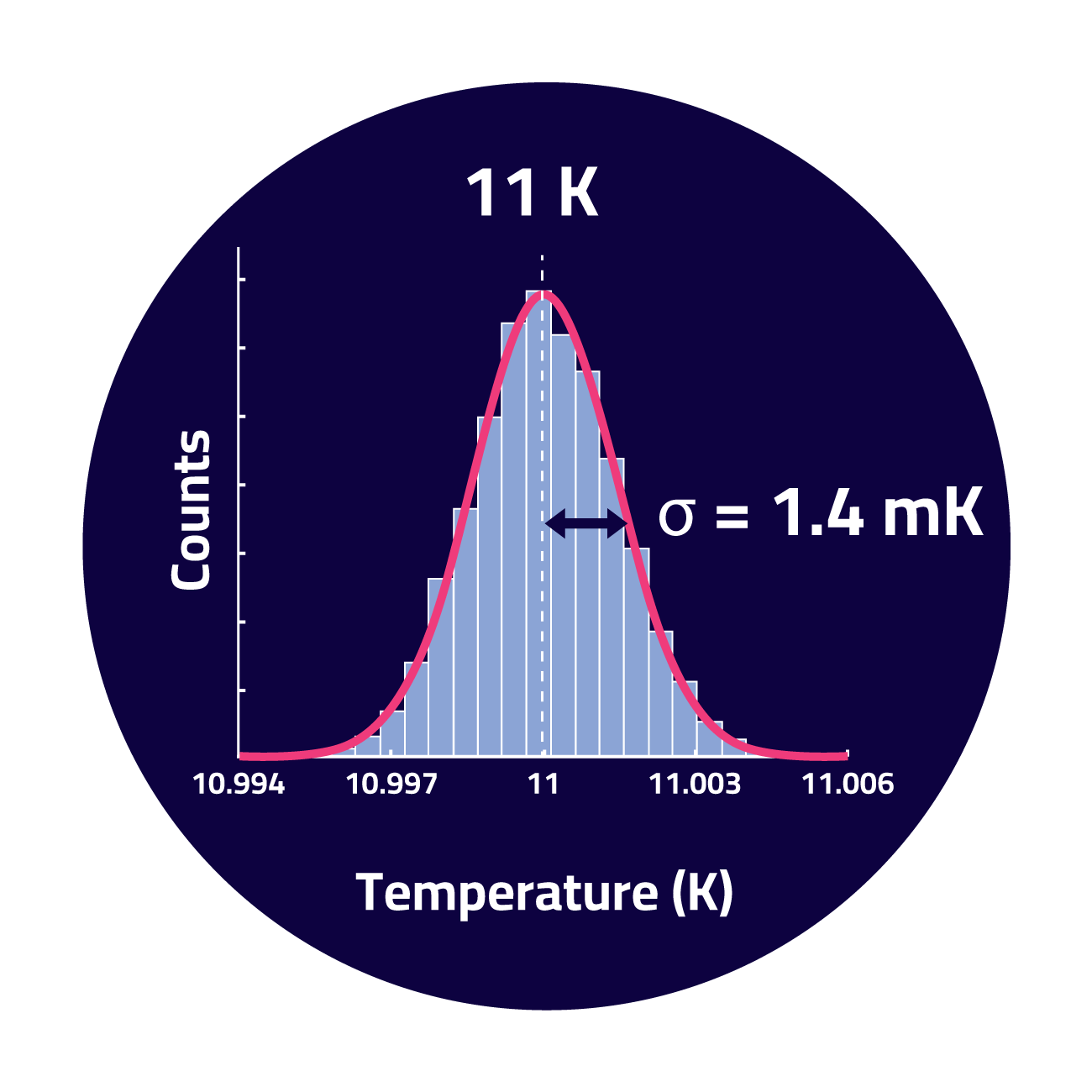
Temperature feedback control maintains millikelvin-scale stability over many hours, supporting long acquisitions and low drift at ultracold specimen temperatures.
The h-Bar Instruments technology incorporates continuous liquid helium flow, vibration decoupling, and precise temperature feedback control to enable high-resolution imaging at ultracold sample temperatures. Lower temperatures can improve electron-beam dose resilience of sensitive specimens and provide access to emergent electronic phases in quantum materials.
Continuous liquid helium flow supports stable ultra-cold operation over extended experiments.
Preserves mechanical stability needed for sub-angstrom information transfer.
Study phase transitions from 20 K to room temperature with controlled temperature sweeps.
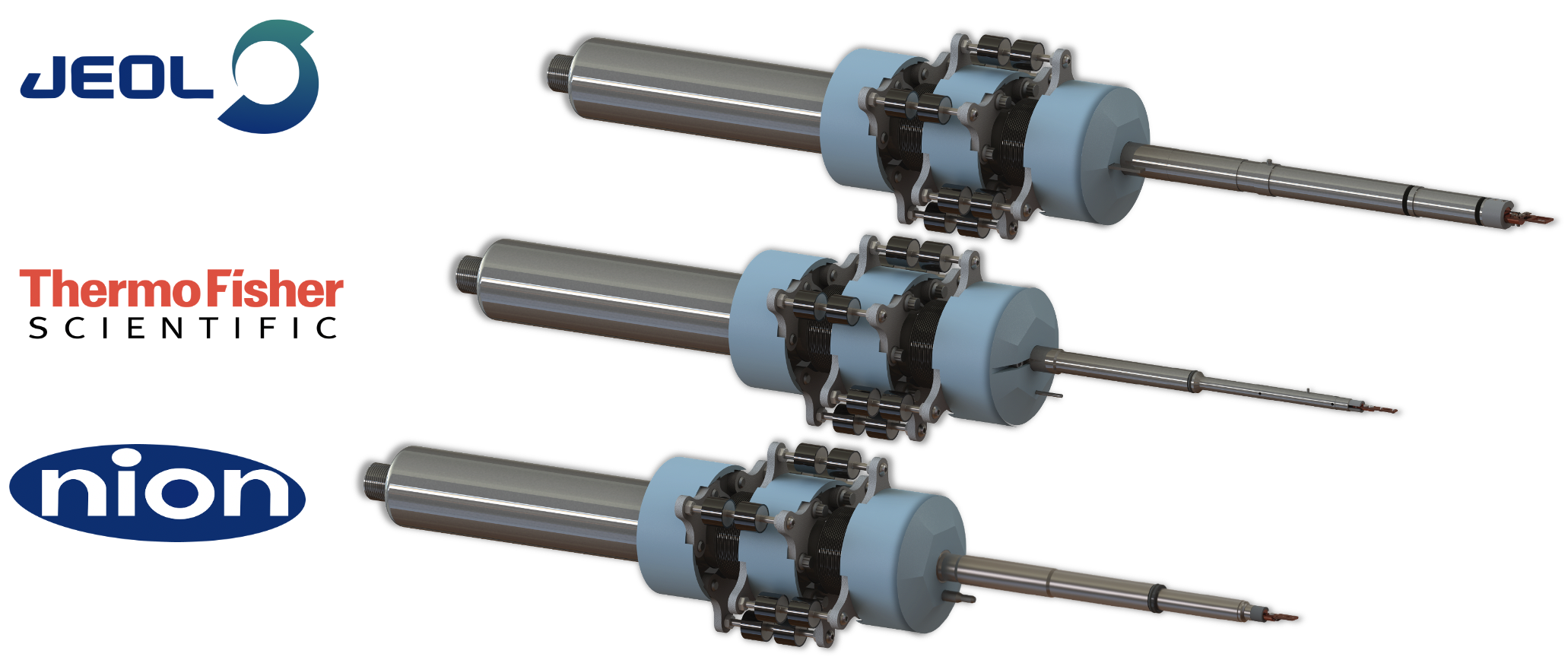
The flexible and modular design enables cross-platform compatibility. The h-Bar Instruments system is available on major electron microscope systems (TFS, Bruker Nion, JEOL). Turn the microscope you already have into a liquid-helium capable instrument.
Maya Gates, Robert Hovden, Ismail El Baggari, Emily Rennich, and Mike Blaney bring deep expertise in ultra-cold cryogenic electron microscopy for probing next-generation materials and devices at the atomic scale.
We have an open position for a Staff Scientist / Engineer to help build next-generation cryogenic instrumentation for electron microscopy.
We also have multiple openings for internships.